
After more than a decade working with residential furniture sourcing, showroom curation, and custom interior projects across the United States, I can say this confidently: Coffee Tables are one of the most misunderstood pieces of furniture in American homes. Buyers often focus on looks alone, while overlooking material integrity, surface performance, and long-term durability.
A coffee table is not just decorative. It takes daily abuse. Hot mugs, spilled drinks, feet on edges, kids climbing, pets scratching, and constant cleaning.
Choosing the wrong material can make even an expensive table look worn within a year. When you select the right one, it can age beautifully for decades.
This review explains modern coffee table types, material quality, and typical USD prices. It also highlights designs that last in U.S. homes.
Solid Wood Coffee Tables: The Benchmark Standard
Solid wood is still the top choice for premium coffee tables in the U.S. market. But not all wood is equal.
High-quality tables typically use kiln-dried hardwood, not construction lumber. Craftspeople make the best examples from solid walnut, rift-sawn white oak, or American hard maple. We choose each wood for its strength and durable surface.
Walnut offers a rich chocolate-brown tone with flowing grain patterns that feel warm under hand contact. When finished with a hand-rubbed oil or low-sheen polyurethane, it resists moisture without creating a plastic feel.
Quarter-sawn white oak has tighter grain and more tannins. This boosts dent resistance and makes it ideal for family rooms. Maple is lighter, smoother, and extremely hard, but it shows scratches more easily unless properly sealed.
Manufacturing quality matters as much as the wood itself. Look for mortise-and-tenon joinery or reinforced dowel construction, not staples or MDF cores. A well-built solid wood coffee table should weigh 80–120 lbs, depending on its size. This weight shows dense wood and solid internal bracing.
Estimated Price (USA):
$700 to $2,200 USD depending on wood species and craftsmanship
Engineered Wood & Veneer Coffee Tables: Budget with Tradeoffs
Engineered wood tables dominate large-scale warehouse-style retail because of their cost efficiency, but they require careful evaluation. High-quality versions use furniture-grade plywood cores layered with real wood veneer, not particle board. A properly applied walnut or oak veneer can visually match solid wood while reducing expansion and contraction issues.
The tactile difference is noticeable. Veneer surfaces feel flatter and colder compared to solid wood, and edge banding can be a weak point if poorly applied. Lower-end products often use paper-thin veneers that you cannot sand or refinish, which limits their lifespan.
From a durability standpoint, engineered Coffee Tables perform best in low-traffic living rooms or staged spaces. They struggle in homes with kids, pets, or heavy daily use. Moisture penetration at seams is the most common failure point.
Estimated Price (USA):
$250 to $700 USD
Glass Coffee Tables: Minimalist but High Maintenance
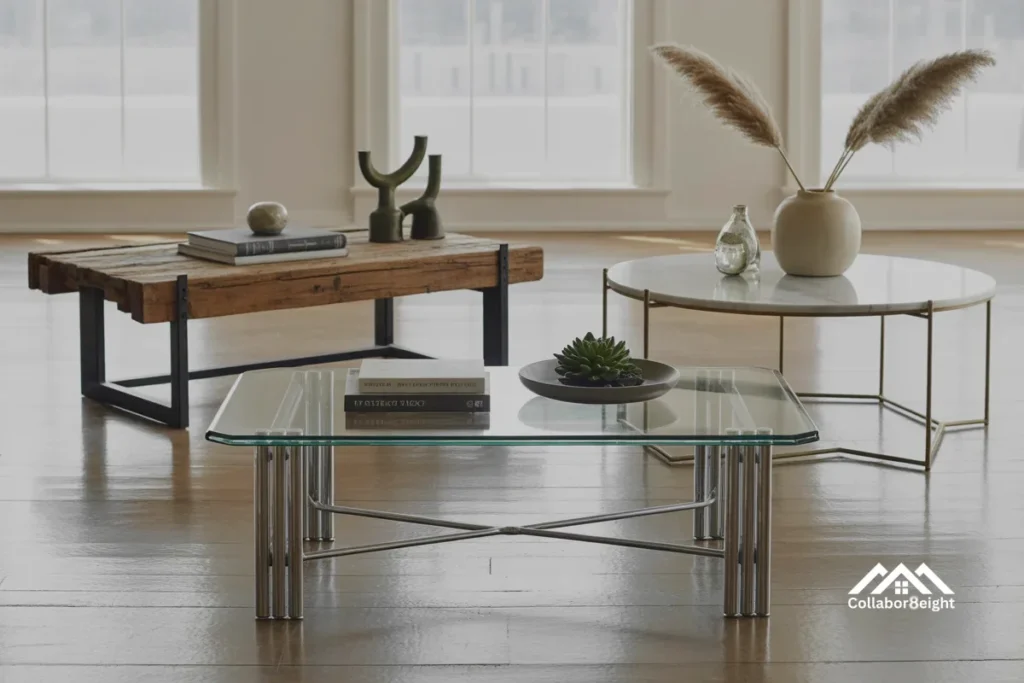
Glass Coffee Tables appeal to modern and urban interiors, especially in condos and apartments where visual lightness matters. High-quality models use tempered safety glass.
Usually, it is 10mm to 12mm thick. This glass meets U.S. safety standards. It helps resist shattering.
The glass surface is smooth, cold, and unforgiving. Every fingerprint shows.
Scratches are permanent. While tempered glass resists breakage, edge impacts can still cause failure if manufacturing tolerances are poor.
Frames matter here. Powder-coated steel or solid stainless steel bases offer the best structural support and vibration control.
Glass works best when paired with neutral interiors and disciplined upkeep. The furniture is not forgiving.
Estimated Price (USA):
$300 to $1,200 USD
Metal Coffee Tables: Industrial Strength and Stability
Metal Coffee Tables have gained popularity in lofts and contemporary American homes. The best versions use thick-gauge steel or cast aluminum with a baked powder-coat finish. Powder coating creates a uniform, durable surface that resists chipping better than liquid paint.
Steel tables feel cool and solid to the touch, with excellent load capacity. Aluminum versions are lighter and corrosion-resistant but can feel hollow if poorly designed. Weld quality is critical. Visible, uneven welds signal mass production shortcuts.
Metal tables work exceptionally well in busy spaces. They pair well with wood or upholstered seating to soften the hard look.
Estimated Price (USA):
$400 to $1,500 USD
Stone & Marble Coffee Tables: Luxury with Responsibility
Stone Coffee Tables, especially marble, signal luxury but demand realism. True marble is porous. High-end tables use sealed Carrara, Calacatta, or Nero Marquina marble slabs at least ¾ inch thick. Thin stone bonded to MDF is a red flag.
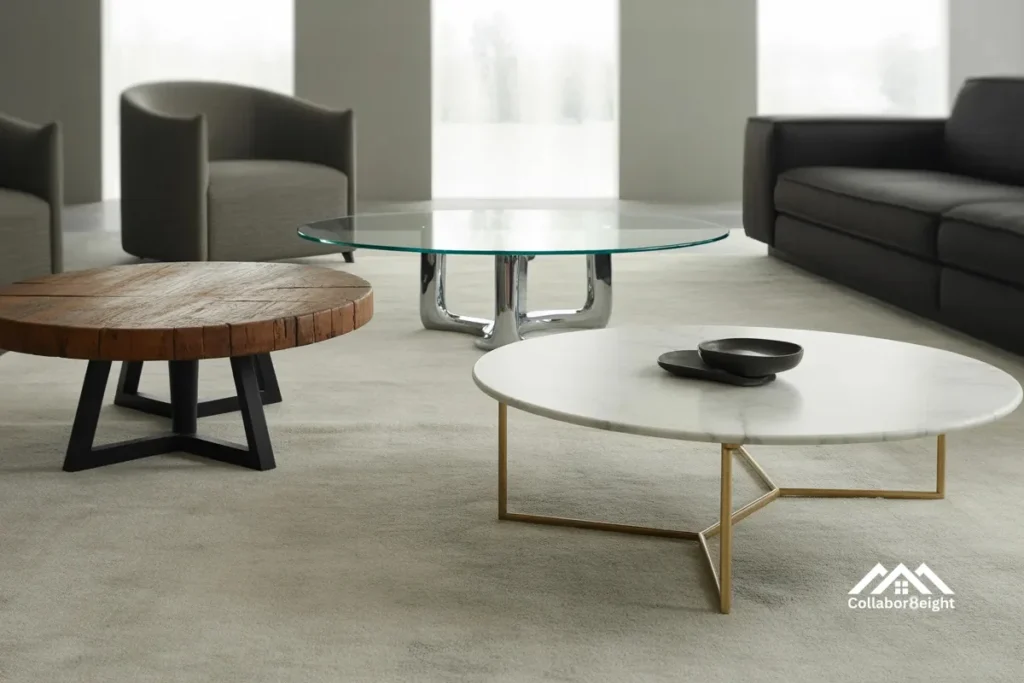
Marble feels cool, heavy, and undeniably premium. It scratches easily and stains if sealant fails. Quartz stone alternatives offer better stain resistance while mimicking marble veining, making them more practical for U.S. households.
These tables work best in adult-only homes or formal sitting areas.
Estimated Price (USA):
$900 to $3,000 USD
Pros of High-Quality Coffee Tables
- Enhances room balance and visual anchoring
- Durable materials improve long-term value
- Proper height improves seating ergonomics
- Premium finishes age gracefully over time
Cons to Consider Honestly
- Low-quality materials fail quickly
- Heavy tables complicate rearranging
- Glass and stone require constant care
- Cheap veneers cannot be repaired
Ideal Use Cases
Coffee Tables perform best when selected based on lifestyle. Solid wood tables excel in family rooms and everyday living spaces.
Glass suits minimalist apartments. Metal works well in studios or modern lofts. Stone fits formal lounges and design-focused interiors.
Who Should Avoid Certain Coffee Tables
Homes with young children should avoid glass and stone surfaces. Renters may want to skip ultra-heavy solid wood because of moving challenges. If maintenance is a concern, marble is not the right choice.
In recent blog posts, we explored living room layout planning and wood finish durability.
We also covered how furniture height affects seating posture. These insights directly impact how Coffee Tables function in real homes and help buyers avoid costly mistakes. Linking these guides internally strengthens buyer education and improves on-site engagement.
Final Thought
A well-chosen coffee table is a long-term investment, not a seasonal accessory. The best Coffee Tables combine material integrity, thoughtful proportions, and honest construction. For most U.S. households, solid hardwood remains the safest and most satisfying choice, even at a higher upfront cost.
What is the standard size of coffee tables in the USA?
In most U.S. homes, a standard coffee table is 16 to 18 inches high, which aligns with the seat height of sofas. Length usually ranges from 40 to 54 inches, depending on room size. The ideal rule is that the coffee table should be about two-thirds the length of the sofa for balanced proportions.
What material is best for coffee tables for daily use?
For everyday use, solid hardwood coffee tables, especially oak or walnut, perform best. They handle weight, resist dents better, and can be refinished if scratched. Engineered wood works for light use, but it does not last as long under heavy wear.
Are glass coffee tables safe for homes with kids?
Glass coffee tables made with tempered safety glass are stronger than regular glass, but they are still not ideal for homes with small children. Sharp corners, fingerprints, and constant cleaning make them less practical for family living rooms.
How much should I spend on a good quality coffee table?
In the U.S. market, a good-quality coffee table typically costs between $600 and $1,200 USD. This range usually ensures solid materials, proper joinery, and durable finishes. Cheaper options often compromise on structure or surface longevity.
What shape of coffee table is best for small living rooms?
For smaller spaces, round or oval coffee tables work best. They improve walking clearance and reduce visual clutter. Rectangular coffee tables can still work if they are slim and paired with enough spacing around seating.
Do coffee tables need to match the sofa?
Coffee tables do not need to match the sofa exactly. In fact, contrast often looks better. A wood coffee table can balance a fabric sofa, while a metal or stone table can add structure to soft seating. The key is harmony, not matching sets.
Are marble coffee tables high maintenance?
Yes. Marble coffee tables require regular sealing and careful cleaning. They stain easily from coffee, wine, or acidic liquids. Quartz or engineered stone alternatives offer a similar look with much lower maintenance.
How much space should be between a sofa and coffee table?
The ideal distance is 14 to 18 inches. This allows comfortable legroom while keeping the table within easy reach. Less space feels cramped, while more space reduces usability.