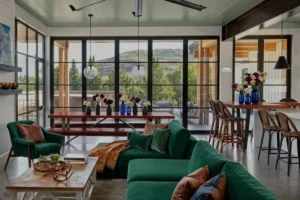
Choosing the right curtains for living room spaces is one of the most impactful decorating decisions you can make and most homeowners completely underestimate it. Your living room tells a story, and nothing shapes that story quite like the curtains on your windows.
Whether you’ve just moved into a new apartment, bought your first home, or simply feel like it’s time for a refresh, picking the right window treatments can feel surprisingly overwhelming. There are hundreds of fabrics, colors, lengths, and hanging styles to consider and design trends shift faster than ever.
This guide cuts through the noise. You’ll find everything you need to pick curtains that look beautiful, work hard, and stand the test of time all grounded in what’s actually trending in 2026.
Table of Contents
Why Living Room Curtains Matter More Than You Think
Most people focus on furniture when decorating a living room. Sofas, coffee tables, rugs these get all the attention. But experienced interior designers will tell you that curtains for living room windows are often the first thing a guest subconsciously notices when they walk in.
Curtains do a lot of heavy lifting:
- Control natural light: protecting your furniture from UV damage and reducing glare on screens
- Improve privacy: especially important for ground-floor apartments or street-facing homes
- Regulate temperature: thick, insulating curtains can meaningfully reduce heating and cooling costs
- Define the aesthetic: the right curtain can make ceilings feel taller, rooms feel cozier, or spaces feel more luxurious
In short, curtains are both functional and deeply decorative. Getting them right is worth the effort.
Living Room Curtain Trends for 2026
Design is always evolving, and 2026 brings a fresh wave of styles that blend practicality with personality. Here’s what’s leading the conversation this year.
1. Earthy, Nature-Inspired Tones
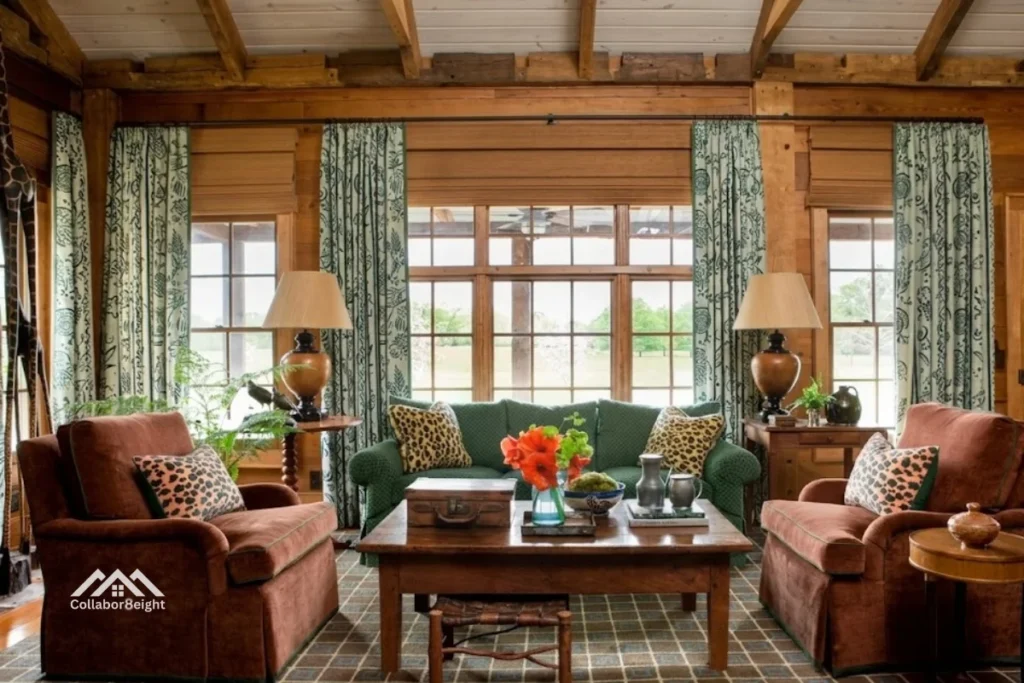
Warm neutrals are everywhere. Think terracotta, warm sand, sage green, dusty mauve, and deep ochre. These shades connect interiors to the natural world, making spaces feel grounded and calm a direct response to the overly cool, sterile look that dominated the early 2020s.
If your living room has white walls and light wood floors, a pair of linen curtains in warm clay or soft sage can completely transform the energy of the space.
2. Textured Fabrics Over Flat Weaves
Flat, shiny fabrics are giving way to tactile, textured materials. Boucle, slubbed linen, velvet, and woven cotton are having a real moment. These fabrics catch light differently throughout the day, adding depth and visual interest without requiring a bold pattern.
Textured curtains also photograph beautifully important for those of us who like our homes to look as good on Instagram as they do in real life.
3. Floor-to-Ceiling Drama
The “hang curtains as high as possible” rule isn’t new, but in 2026, it’s become non-negotiable for anyone going for a polished, designer-approved look. Mounting curtain rods just below the ceiling even in rooms with standard 8-foot ceilings creates the illusion of height and makes windows appear much larger than they are.
If you’re on a budget, this one trick alone can make inexpensive curtains look incredibly expensive.
4. Sheer Layering Is Back
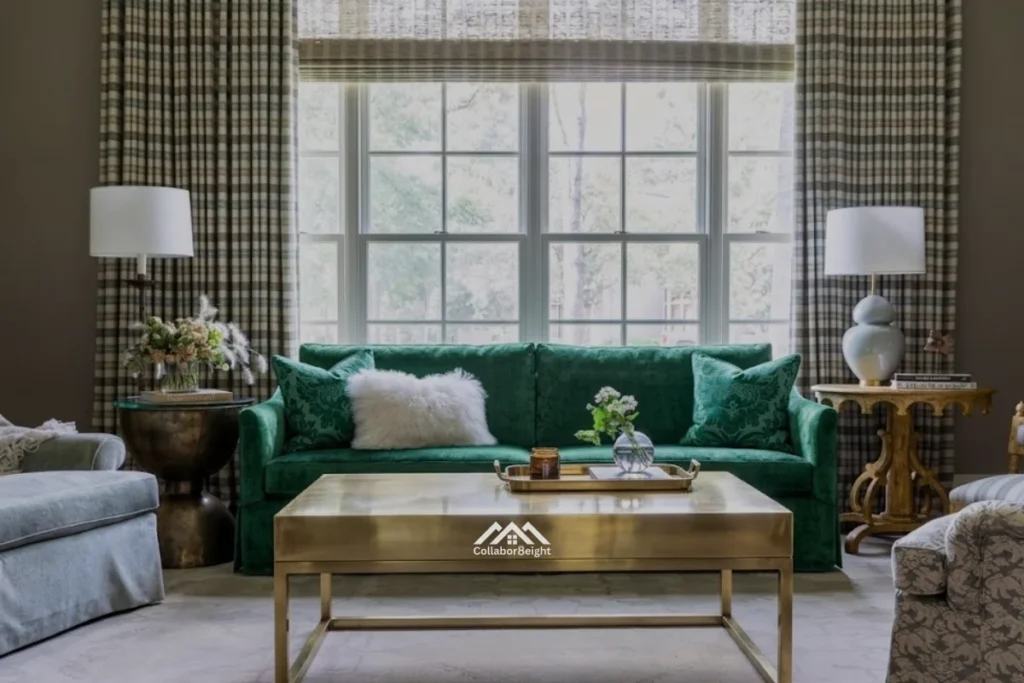
Layering a sheer curtain panel underneath a heavier drape was popular in the early 2000s, disappeared for a while, and is now back but refined. Today’s layered look combines light, airy sheers (often in white, cream, or soft blush) with a heavier linen or velvet outer panel.
The result is both functional and beautiful: you get privacy and light diffusion from the sheer, and drama and warmth from the outer layer.
5. Sustainable and Natural Materials
Eco-consciousness has officially moved from niche to mainstream in home décor. Organic cotton, recycled linen, bamboo-blend fabrics, and naturally dyed textiles are increasingly sought after by American homeowners who want their homes to reflect their values.
Beyond the environmental benefit, natural materials also tend to age more gracefully than synthetics they soften beautifully over time rather than looking worn.
6. Quiet Patterns: Subtle Prints, Not Bold Graphics
2026 favors restraint in pattern. Tonal stripes, soft watercolor prints, delicate botanical motifs, and geometric weaves are popular choices. Loud, high-contrast prints are largely out at least in living rooms where the goal is calm and sophisticated relaxation.
How to Choose the Right Curtains for Your Living Room
The best curtains for living room spaces are the ones that work for your specific lifestyle and home setup. Trends are a starting point, not a rulebook. Here’s how to think through the decision.
Consider Your Light Needs First
Before you fall in love with a fabric or color, ask yourself: how much light control do I actually need?
- Blackout curtains: ideal if your living room doubles as a home theater, or if afternoon sun creates glare issues
- Light-filtering curtains: soften natural light without blocking it entirely; a great everyday choice for most living rooms
- Sheer curtains: maximize daylight while providing a degree of privacy; best layered with heavier panels for evenings
Match the Curtain Weight to Your Room’s Scale
A petite window in a smaller apartment calls for lighter, airier fabrics like voile or linen. A grand, double-height window in a larger home can handle the drama of heavy velvet or layered drapes.
Getting the scale wrong heavy drapes on a small window, or wispy sheers on a large architectural opening tends to look awkward, no matter how beautiful the fabric is on its own.
Choose a Length That Flatters
There are three common curtain lengths, each with a different effect:
- Puddle length (1–6 inches on the floor): Dramatic and romantic, often seen in formal living rooms
- Touching the floor (just barely grazing): Clean and polished the most versatile choice for most homes
- Hovering above the floor (½ inch gap): Practical but can make ceilings feel lower; generally avoid in living rooms
Think About Color in Context
The color of your curtains should be considered alongside your wall color, flooring, and existing furniture not in isolation.
- Tone-on-tone (curtains in a similar color family as the walls) creates a seamless, sophisticated look
- Contrast curtains (darker or brighter than the walls) add visual punch and anchor a space that feels too neutral
- Pattern mixing works when you keep the scale and color palette consistent
Best Curtain Fabrics for Living Rooms: A Quick Breakdown
| Fabric | Best For | Pros | Cons |
|---|---|---|---|
| Linen | Casual to mid-formal rooms | Breathable, ages beautifully, textured | Wrinkles easily |
| Velvet | Formal, cozy, or dramatic rooms | Luxurious feel, excellent light-blocking | Heavy, harder to clean |
| Cotton | Everyday casual living rooms | Affordable, easy to wash, versatile | Less drapey than linen |
| Sheer/Voile | Light-filled rooms, layering | Airy, maximizes light | Minimal privacy alone |
| Polyester Blend | Renters, high-traffic spaces | Durable, wrinkle-resistant, affordable | Can look synthetic |
| Boucle/Textured | Cozy, modern, Japandi-inspired | Visually interesting, on-trend | Less light control |
Curtain Styles That Work for Every Living Room Type
For Small Apartments and Studio Living Rooms
Keep it simple and vertical. Hang curtains close to the ceiling, choose light colors, and avoid heavy or busy patterns. Sheer linen panels in white or cream are almost universally flattering in smaller spaces. Layer with a simple roller blind for evening privacy.
For Open-Concept Living and Dining Areas
Consistency is key. Using the same curtain fabric or color throughout an open-plan space even if the windows vary in size creates visual flow and makes the space feel intentional rather than pieced together.
For Traditional or Classic Living Rooms
Go for rich fabrics with subtle detail. Silk-look polyester, velvet in jewel tones like navy or forest green, or classic linen drapes with pinch pleat headings all work beautifully. Traditional spaces can handle more visual weight.
For Modern or Minimalist Living Rooms
Choose simple heading styles grommet top or rod pocket in solid, textured fabrics. Keep color calm: off-white, warm grey, soft taupe. The goal is for curtains to feel effortless and architectural rather than decorative.
For Boho and Eclectic Spaces
This is where you can have fun. Macramé panels, globally-inspired prints, layered curtains in complementary patterns, and mixed textures all work in a boho-inspired space. The key is color cohesion let the palette tie it all together.
Hanging Tips That Make a Difference
Even the most beautiful curtains can fall flat if they’re hung incorrectly. Here are the practical details that matter:
- Mount the rod 4–6 inches above the window frame (or right below the crown molding) to maximize ceiling height perception
- Extend the rod 4–6 inches on each side of the window frame so curtains stack outside the glass when open
- Use enough panels your combined panel width should be 2–2.5x the width of the window for a full, luxurious look
- Steam, don’t iron a handheld steamer removes wrinkles from hanging curtains far more effectively than ironing flat
Budget-Friendly Curtain Ideas That Don’t Look Cheap
You don’t need to spend a fortune to get beautiful curtains for living room windows. Here’s how to stretch your budget without sacrificing style:
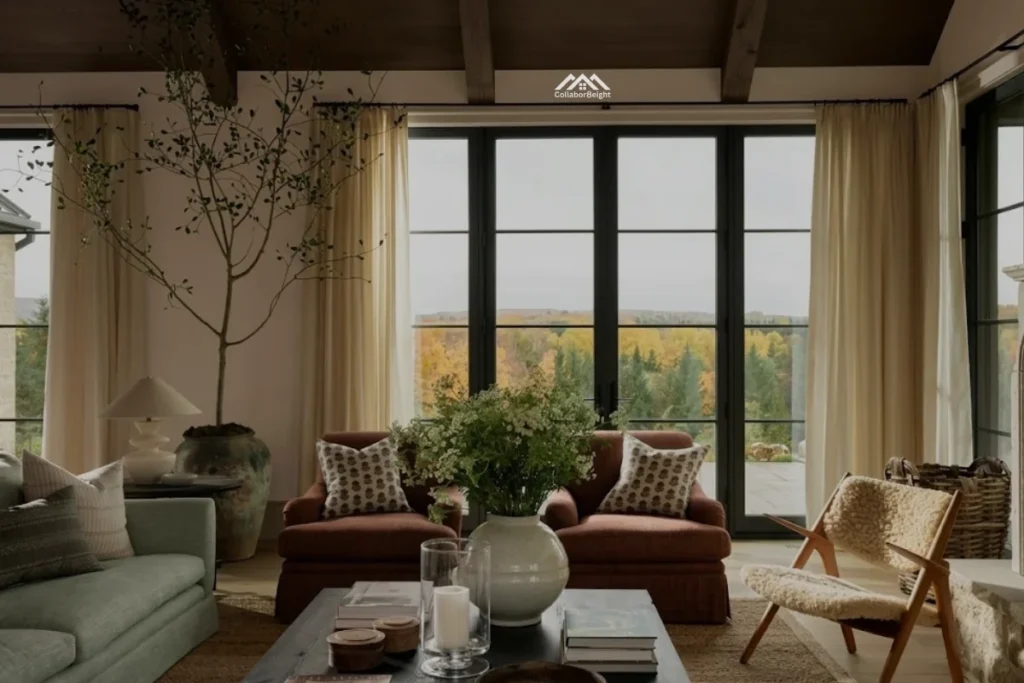
- Buy extra-long curtains and hem them yourself: ready-made curtains are often cheaper than custom ones, and a simple hem is an easy DIY
- Use clip rings instead of sewn headings: clip rings let you hang almost any fabric as a curtain, opening up affordable options from fabric stores
- Layer an affordable sheer with one good-quality drape: the sheer does the functional work during the day, and the outer panel adds drama at night
- Shop end-of-season sales: retailers like Target, IKEA, Pottery Barn, and Amazon Home offer 30–50% discounts at season-end
- Consider IKEA’s DYTÅG or MAJGULL panels: consistently praised for their quality-to-price ratio in on-trend neutral tones
Curtain Care: Making Your Investment Last
Curtains are easy to neglect but a little maintenance goes a long way. Here’s how to keep them looking great:
- Dust or vacuum panels monthly using a soft brush attachment dust buildup dulls color over time
- Follow the care label, but most linen and cotton curtains can be machine washed on a gentle cycle in cold water
- Re-hang while slightly damp gravity smooths out wrinkles as they dry
- Rotate panels if one side gets significantly more sun to prevent uneven fading
- Keep velvet away from moisture velvet curtains should be professionally dry cleaned or spot treated only
Final Thought: The Right Curtains Transform Everything
Choosing curtains for living room spaces doesn’t have to be stressful. Start with function how much light do you want, how much privacy do you need? Then move to aesthetics what colors, textures, and styles feel true to how you want your home to feel.
In 2026, the clearest direction is toward warmth, texture, and timelessness. The most successful living rooms aren’t chasing a trend they’re choosing curtains that feel genuinely at home in the space, that complement the furniture and light, and that the homeowner will still love five years from now.
Take your time. Hang test swatches when you can. And don’t be afraid to go a little longer, a little bolder, or a little more textured than you think you can pull off. Curtains that make you smile every time you walk into the room are worth every minute of the decision.
What are the most popular curtain colors for living rooms in 2026?
Warm neutrals are dominating terracotta, warm white, sage green, dusty blush, and camel are all trending. Deep jewel tones like forest green and navy are popular for more formal or dramatic spaces.
How long should curtains be in a living room?
The best curtains for living room settings are floor-length — meaning the fabric just barely grazes or touches the floor. Puddle-length (1–3 inches on the floor) adds drama for formal settings. Curtains that stop mid-wall or at the windowsill tend to make ceilings feel lower.
Is it better to match curtains to walls or to furniture?
Neither is a hard rule. Tone-on-tone curtains (close to your wall color) create a seamless, sophisticated look. Curtains that pick up an accent color from your furniture or rug can tie the room together beautifully. Avoid matching too precisely — it tends to look formulaic.
What’s the best curtain fabric for a sunny living room?
Linen is an excellent choice — it diffuses light beautifully and resists fading better than many synthetic fabrics. For more light control, consider a linen-cotton blend with a light-filtering lining. For full UV protection, look for curtains with a blackout lining.
How do I make my living room look bigger with curtains?
The trick with curtains for living room spaces is to hang your rod as high as possible, extend it several inches wider than the window on each side, and choose light, solid colors or vertical patterns. These three tricks together can dramatically increase the perceived size of any room.
Are grommet-top curtains still in style for 2026?
Yes, grommet tops remain popular for modern and casual living rooms because they hang cleanly and are easy to open and close. Pinch pleat and ripple fold headings are more favored for formal or high-end looks in 2026.
How many curtain panels do I need for one window?
As a general rule, your combined panel width should be 2 to 2.5 times the width of the window. For a standard 48-inch window, two 52-inch panels (one on each side) provide a full, luxurious look when closed.