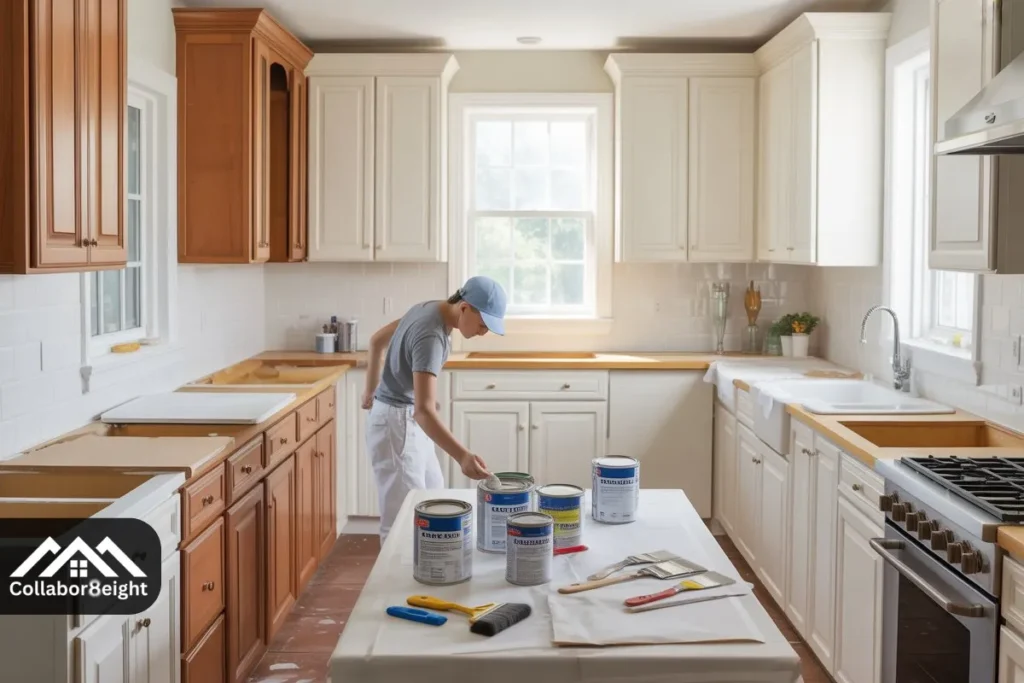
Painting your kitchen cabinets is one of the most cost-effective ways to transform your kitchen without a full renovation. In 2026, improved paint technology, low-VOC products, and smarter prep methods have made it easier than ever for homeowners to get professional-looking results on a DIY budget.
If you’ve been searching for how to paint kitchen cabinets the right way—without peeling paint, brush marks, or wasted time—this guide walks you through every step, from prep to finishing touches.
Whether you’re refreshing outdated oak cabinets, modernizing a builder-grade kitchen, or preparing your home for resale, this article is designed to match exact search intent and give you practical, experience-backed advice you can trust.
Why Painting Kitchen Cabinets Is Still Worth It in 2026
Kitchen remodels are expensive. Cabinet replacement alone can cost $8,000–$20,000+ in the U.S. Painting, on the other hand, typically costs under $500 for DIY or $2,500–$5,000 professionally.
Benefits of Painting Cabinets
- Saves up to 80% compared to replacement
- Increases home value and buyer appeal
- Custom color options for modern styles
- Eco-friendly (less waste, low-VOC paints)
- Fast turnaround (weekend projects possible)
With updated cabinet paints designed specifically for high-traffic kitchens, painted cabinets now last longer and resist chipping better than ever.
Is Painting Kitchen Cabinets a Good Idea for Your Kitchen?
Before learning how to paint kitchen cabinets, it’s important to know when painting makes sense—and when it doesn’t.
Cabinets That Are Ideal for Painting
- Solid wood cabinets
- MDF cabinet doors
- Laminate cabinets (with proper prep)
- Previously painted cabinets in good condition
Cabinets You Should NOT Paint
- Warped or water-damaged cabinets
- Cheap thermofoil cabinets (often peel)
- Cabinets with structural issues
If the cabinet boxes are solid, painting is almost always worth it.
Tools and Materials You’ll Need (2026 Updated List)
Using the right tools is critical for a smooth, durable finish.
Essential Supplies
- Screwdriver or drill
- Painter’s tape (low-tack)
- Drop cloths or plastic sheeting
- Degreaser or TSP alternative
- Sandpaper (120, 220, 320 grit)
- Sanding sponge
- High-quality bonding primer
- Cabinet-specific paint
- Foam rollers + angled brush
- Paint sprayer (optional but recommended)
Best Paint Types for Kitchen Cabinets
| Paint Type | Best For | Notes |
|---|---|---|
| Acrylic Enamel | Most DIYers | Durable, water-based |
| Alkyd Hybrid | Pro-level finish | Smooth, hardens like oil |
| Cabinet-Specific Paint | Kitchens | Designed for wear & grease |
In 2026, low-VOC and zero-VOC cabinet paints dominate the market, making indoor painting safer than ever.
How to Paint Kitchen Cabinets (Step-by-Step)
This is the exact process professionals use—adapted for homeowners.
Step 1: Remove Cabinet Doors and Hardware
Label every door and drawer with painter’s tape so you know where it goes back.
✔ Remove:
- Cabinet doors
- Drawer fronts
- Hinges
- Knobs and pulls
Skipping this step is one of the biggest mistakes people make.
Step 2: Clean Cabinets Thoroughly
Kitchen cabinets collect grease, oil, and food residue that paint won’t stick to.
Best Cleaning Options
- Degreaser spray
- Dish soap + warm water
- TSP substitute (eco-friendly)
Let everything dry completely before moving on.
Step 3: Sand for Proper Paint Adhesion
You don’t need to strip cabinets to bare wood—but scuff sanding is non-negotiable.
Sanding Process
- Use 120–150 grit for heavy finish
- Use 220 grit for smoothing
- Finish with 320 grit before painting
The goal is to dull the surface, not remove it.
Step 4: Apply a High-Quality Primer
Primer is what separates long-lasting cabinet paint jobs from peeling disasters.
Best Primer Types
- Bonding primer (for laminate)
- Stain-blocking primer (for wood)
- Shellac-based primer (for tannins)
Apply thin, even coats and let dry fully.
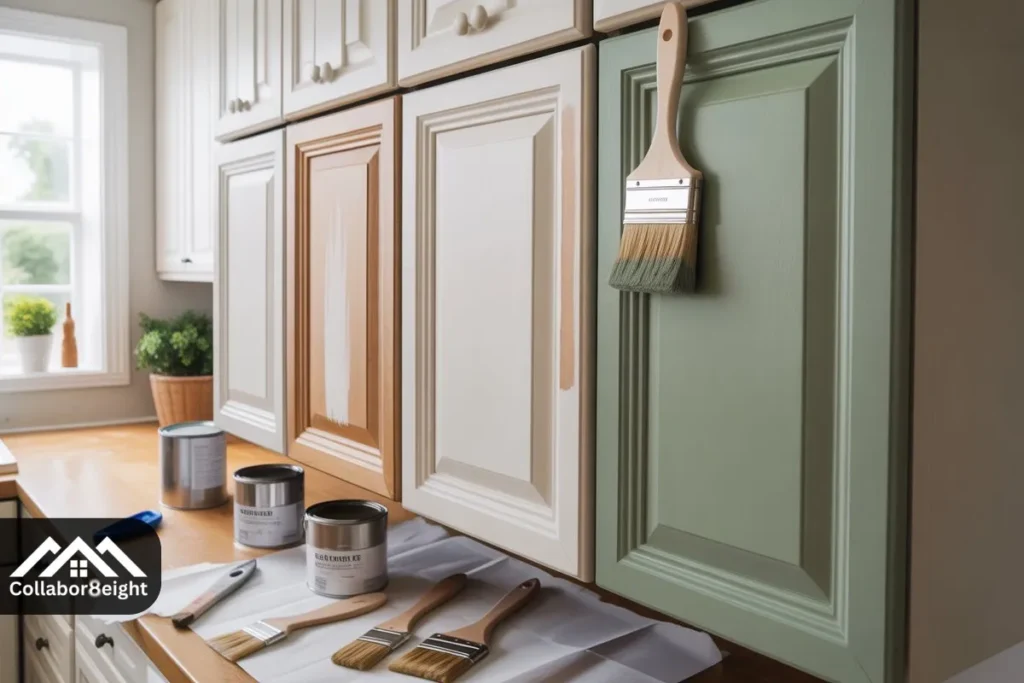
Step 5: Choose the Right Cabinet Paint Color
In 2026, kitchen cabinet color trends focus on timeless neutrals and warm tones.
Popular Cabinet Colors
- Soft white
- Greige
- Warm beige
- Sage green
- Navy blue
- Charcoal gray
Pro tip: Satin or semi-gloss finishes are easiest to clean and most durable.
Step 6: Paint Cabinets (Brush, Roller, or Sprayer)
This is where patience pays off.
Best Application Methods
- Paint sprayer – smoothest finish
- Foam roller + brush – best for DIY
- Brush only – not recommended
Apply 2–3 thin coats, sanding lightly between coats.
Step 7: Let Cabinets Cure (Not Just Dry)
Paint may feel dry in hours—but curing takes time.
Curing Timeline
- Light use: 48–72 hours
- Reinstall hardware: 5–7 days
- Full cure: 21–30 days
Avoid slamming doors during this period.
Common Mistakes to Avoid When Painting Kitchen Cabinets
- Skipping primer
- Painting over grease
- Using wall paint instead of cabinet paint
- Rushing drying time
- Not sanding between coats
Avoiding these mistakes can double the lifespan of your paint job.
DIY vs Professional Cabinet Painting (Cost Comparison)
| Option | Average Cost (USA) | Best For |
|---|---|---|
| DIY | $200–$600 | Budget-conscious homeowners |
| Professional | $2,500–$5,000 | High-end kitchens |
DIY painting offers excellent ROI if you follow proper steps.
How Long Do Painted Kitchen Cabinets Last?
With modern 2026 cabinet paints:
- DIY job: 5–8 years
- Professional job: 10–15 years
Proper prep and curing make all the difference.
Are Painted Cabinets Still in Style in 2026?
Absolutely.
Painted cabinets continue to dominate kitchen design due to:
- Minimalist aesthetics
- Easy color updates
- Increased resale appeal
- Compatibility with smart kitchens
They’re not a trend—they’re a standard.
Final Thoughts
If you want a high-impact kitchen upgrade without the massive cost, learning how to paint kitchen cabinets is one of the smartest home improvement skills you can master.
With the right tools, patience, and modern cabinet paints, your kitchen can look brand new in just a few days—without tearing anything out.
FAQs
1. How long does it take to paint kitchen cabinets?
Most DIY projects take 3–5 days, including prep, painting, and drying time.
2. What is the best paint for kitchen cabinets in 2026?
Acrylic enamel and alkyd hybrid cabinet paints offer the best durability and smooth finish.
3. Do I need to sand cabinets before painting?
Yes. Light sanding is essential for proper paint adhesion and long-term durability.
4. Can I paint laminate kitchen cabinets?
Yes, but only with proper cleaning, sanding, and a high-quality bonding primer.
5. Is it better to spray or roll kitchen cabinet paint?
Spraying gives the smoothest finish, but foam rollers work well for most DIYers.