An art deco bathroom is more than a design choice — it’s a bold architectural statement rooted in 1920s glamour, geometric precision & modern American luxury. In 2026, this iconic aesthetic is resurging across high-end remodels, boutique renovations & new construction homes throughout the United States. Homeowners are drawn to its symmetrical lines, metallic accents, marble surfaces & unapologetic elegance.
This comprehensive guide explores historical foundations, technical design principles, material specifications, cost estimates, expert installation insights & trend forecasts to help you create a truly standout space.
The Historical Foundation of the Art Deco Bathroom
The original art deco bathroom aesthetic emerged during the Roaring Twenties, reflecting industrial progress, global influences & newfound optimism. Unlike Art Nouveau’s flowing organic lines, Art Deco embraced sharp geometry, symmetry, stepped forms & high-contrast palettes. Bathrooms of the era often featured black-&-white tile floors, pedestal sinks, chrome fixtures & glazed ceramic wall treatments extending halfway up the wall.
In the United States, cities like New York, Chicago & Miami became epicenters of Deco architecture. Iconic buildings such as the Chrysler Building influenced residential interiors, including bathrooms. Materials like terrazzo, marble, Vitrolite glass panels & polished nickel were considered cutting-edge at the time.
Today’s art deco bathroom revival respects historical proportions while integrating modern plumbing codes, energy-efficient fixtures & moisture-resistant substrates. Contemporary adaptations maintain geometric integrity while meeting ANSI tile standards, ADA compliance when needed & modern waterproofing protocols.
Core Design Principles of an Art Deco Bathroom
1. Geometry & Symmetry
At the heart of every art deco bathroom is strong geometry. Hexagon tiles, chevron patterns, stepped cabinetry & fluted glass define the visual language. Symmetry is essential — double vanities with identical sconces, centered mirrors & evenly spaced wall paneling establish architectural balance.
Modern applications often use large-format porcelain tiles (24″x48″) with rectified edges to create seamless surfaces while maintaining classic geometric rhythm. Designers frequently integrate brass inlays into marble flooring for an elevated touch.
2. Luxurious Materials
Authentic material selection separates a standard remodel from the best art deco bathroom designs. Popular surfaces include:
- Calacatta or Nero Marquina marble
- High-gloss lacquer cabinetry
- Fluted or reeded glass panels
- Polished chrome or unlacquered brass hardware
- Black-&-white porcelain mosaic tile
For U.S. homeowners, marble slabs range from $70–$200 per square foot installed, while high-end porcelain alternatives cost $12–$35 per square foot.
3. High-Contrast Color Palettes
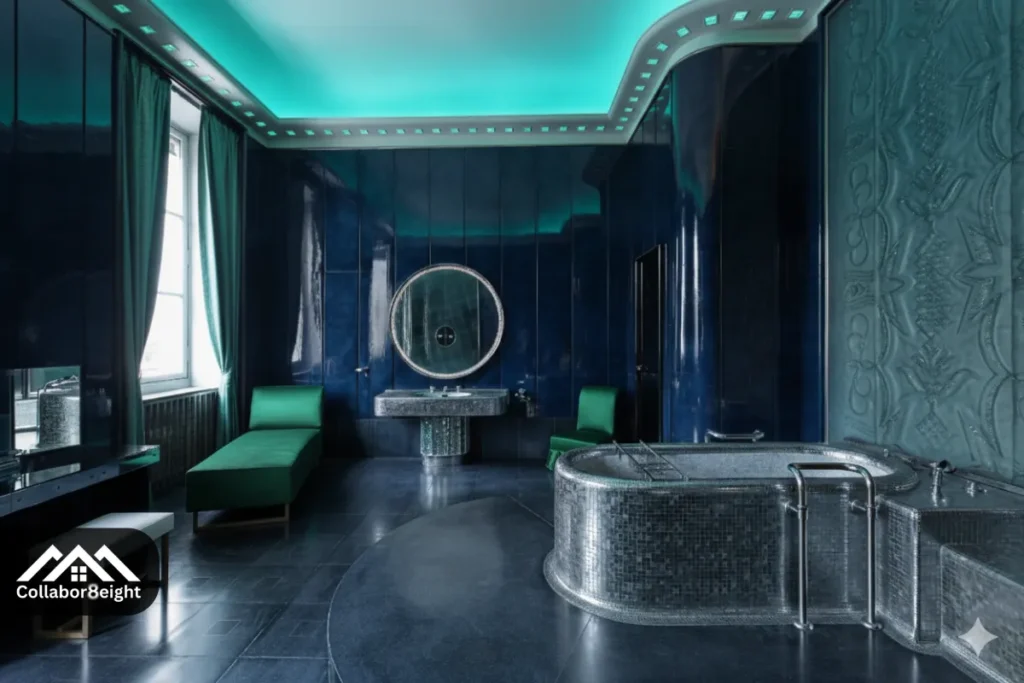
Classic combinations include black & white, emerald & gold, navy & chrome, or blush & brass. Paint finishes typically lean toward satin or semi-gloss in bathrooms for humidity durability.
Layout Planning & Technical Specifications
A successful art deco bathroom remodel begins with spatial planning. The average U.S. primary bathroom measures 100–160 square feet, while powder rooms typically range between 20–40 square feet. Deco design performs exceptionally well in both scales due to its emphasis on symmetry.
Plumbing & Fixture Guidelines
- Vanity height: 34–36 inches (ADA: 34 inches max)
- Shower enclosure: Minimum 36″x36″ (luxury builds: 48″x60″+)
- Freestanding tub clearance: 4 inches minimum from wall, 24 inches walking space
- Waterproofing membrane: ANSI A118.10 compliant
Premium Deco-style widespread faucets range from $350–$1,200 depending on finish. Freestanding tubs cost between $1,000–$4,500 installed.
Lighting Design
Lighting plays a defining role in the art deco bathroom trend. Popular choices include:
- Frosted globe sconces
- Tiered chandeliers
- Backlit arched mirrors
- Polished chrome wall lights
Expect to invest $250–$1,500 per fixture for high-quality designer lighting.
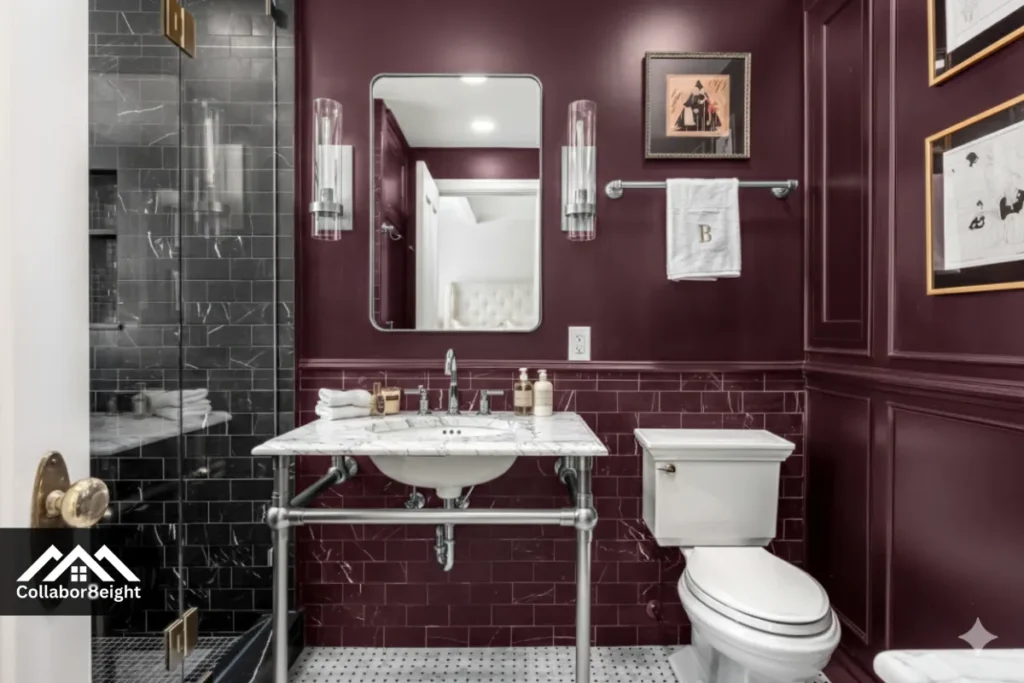
Flooring & Wall Treatments for an Art Deco Bathroom
Flooring sets the visual foundation of an art deco bathroom. Black-&-white hexagonal mosaics remain the most recognizable option, but large-scale marble slabs with brass inlays are increasingly popular in 2026 renovations.
Popular Flooring Options (USA Pricing)
| Material | Cost Installed (per sq ft) | Pros | Cons |
|---|---|---|---|
| Porcelain Mosaic | $12–$25 | Durable, water-resistant | Grout maintenance |
| Natural Marble | $70–$200 | Luxury appearance | Requires sealing |
| Terrazzo | $25–$70 | Seamless, retro appeal | Higher install complexity |
| Luxury Vinyl Tile | $6–$12 | Budget-friendly | Less authentic |
Wall treatments frequently incorporate wainscoting tile up to 48 inches, with painted upper walls or full-height slab installations for dramatic impact.
Vanities, Mirrors & Storage Solutions
The vanity is the centerpiece of any art deco bathroom. Expect bold finishes like piano-black lacquer, dark walnut veneer or cream cabinetry with gold trim. Fluted detailing on drawer fronts has become a defining feature of the art deco bathroom 2026 aesthetic.
Double vanities typically cost between $2,500–$8,000 installed, depending on materials & countertop selection. Quartz alternatives to marble are gaining popularity for lower maintenance.
Mirror Selection
Arched mirrors, stepped frames & backlit designs reinforce Deco geometry. Prices range from $300–$1,800 depending on size & lighting integration.
Step-by-Step: How to Create the Best Art Deco Bathroom
Creating the best art deco bathroom requires thoughtful sequencing & coordination among trades.
Step 1: Concept Development
Start with a clear color scheme & material board. Select one dominant stone, one metallic finish & one accent color. Avoid mixing more than two metal finishes to preserve cohesion.
Step 2: Structural Preparation
Ensure subfloor leveling within 1/8″ over 10 feet. Install cement backer board or waterproof foam boards in wet areas. Verify ventilation meets IRC requirements (minimum 50 CFM for bathrooms under 100 sq ft).
Step 3: Install Signature Elements
Lay flooring first, followed by wall tile & vanity installation. Position lighting to highlight symmetry. Install mirrors last to prevent damage during construction.
Cost Breakdown: USA Market Estimates (2026)
| Bathroom Type | Budget Range |
|---|---|
| Powder Room Refresh | $8,000–$18,000 |
| Mid-Range Remodel | $25,000–$45,000 |
| Luxury Primary Suite | $60,000–$120,000+ |
Labor accounts for approximately 40–55% of total renovation cost in most U.S. metropolitan markets.
Pros & Cons of an Art Deco Bathroom
| Pros | Cons |
|---|---|
| Timeless luxury appeal | Higher material costs |
| Strong resale value in upscale markets | Requires precise execution |
| Photogenic & trend-forward | Marble requires maintenance |
| Works in small & large layouts | Overuse can feel overwhelming |
The Art Deco Bathroom Trend in 2026
The art deco bathroom trend is evolving beyond simple black-&-white palettes. Designers are incorporating jewel tones such as emerald, sapphire & deep burgundy. Mixed metals — especially brushed brass paired with polished chrome — are becoming more common in high-end markets like California, Texas & Florida.
Sustainability is also shaping the art deco bathroom 2026 movement. Homeowners are choosing WaterSense-certified fixtures, LED integrated lighting & engineered quartz alternatives to reduce environmental impact while maintaining visual richness.
Expert Tips for a Flawless Art Deco Bathroom
- Maintain strict symmetry. Even minor misalignment disrupts Deco harmony.
- Invest in lighting. Layer ambient, task & accent lighting for dimensionality.
- Limit color palette. Two dominant colors & one metallic finish create cohesion.
- Choose quality grout. Epoxy grout resists staining in high-contrast tile floors.
- Balance boldness. Too many patterns can compete visually.
Who Should Choose an Art Deco Bathroom?
This design style suits homeowners who appreciate architectural heritage, statement interiors & high-contrast drama. It performs exceptionally well in historic home renovations, luxury condominiums & boutique hospitality-inspired residences.
Real estate professionals report that a well-executed art deco bathroom can increase perceived home value by 5–8% in competitive urban markets.
Final Thoughts
An art deco bathroom merges 1920s sophistication with 2026 innovation, delivering both historical character & modern performance. With precise geometry, high-quality materials & thoughtful lighting, this style offers long-term value & unmistakable glamour. Whether designing a compact powder room or a sprawling primary suite, strategic planning ensures a cohesive & investment-worthy result.
What is an Art Deco bathroom?
An Art Deco bathroom features bold geometry, high-contrast colors, luxurious materials like marble & brass, and symmetrical layouts inspired by 1920s–1930s design.
What did a 1930s bathroom look like?
A 1930s bathroom typically had black-&-white tile floors, pedestal sinks, chrome fixtures, subway tile walls & built-in medicine cabinets.
What is the current trend for bathrooms?
Current bathroom trends focus on spa-like comfort, natural stone looks, warm metallic finishes & sustainable WaterSense fixtures.
What is Art Deco style?
Art Deco is a 1920s–1930s design movement defined by geometric patterns, symmetry, rich materials & streamlined forms.
Was Art Deco a luxury style?
Yes, Art Deco was considered a luxury style because it used expensive materials like marble, chrome, exotic woods & lacquered finishes.