Hardwood floors add warmth, value, and character to a home. But they also need the right care. Clean them the wrong way and you risk dullness, scratches, or permanent damage. Clean them correctly and they can look beautiful for decades.
This guide explains how to clean hardwood floors using modern, floor-safe methods that actually work in real homes. Whether your floors are solid hardwood, engineered wood, or prefinished planks, this article covers what to do, what to avoid, and how to keep them looking new in 2026 and beyond.
Understanding Your Hardwood Floor Type
Before cleaning, you need to know what kind of floor you have. Different finishes react differently to moisture and cleaners.
Common hardwood floor types in US homes
- Solid hardwood: Thick planks, usually oak, maple, or hickory
- Engineered hardwood: Real wood top layer over plywood
- Prefinished hardwood: Factory-sealed with protective coating
- Site-finished hardwood: Sanded and sealed after installation
Most modern US homes have prefinished or engineered hardwood. These are durable but still sensitive to excess water and harsh chemicals.
If you are unsure, test a small hidden area with a damp cloth. If water darkens the wood quickly, it needs extra care.
What You Should Never Use on Hardwood Floors
Many floor problems come from using the wrong products.
Avoid these completely:
- Excess water or soaking mops
- Steam cleaners not approved by the manufacturer
- Vinegar or acidic solutions
- Ammonia-based cleaners
- Abrasive scrub pads or steel wool
- Wax or polish on floors with a polyurethane finish
These can strip the finish, cause warping, or leave residue that attracts dirt.
Daily and Weekly Hardwood Floor Cleaning
Keeping dirt off the floor is the most important step. Grit acts like sandpaper under your feet.
Daily or every other day
- Use a microfiber dust mop
- Vacuum with a hardwood-safe setting
- Focus on high-traffic areas like entryways and kitchens
Weekly
- Light damp mopping with a wood-safe cleaner
- Spot clean spills and sticky areas
- Check corners and edges where dust builds up
This routine prevents scratches and reduces the need for deep cleaning later.
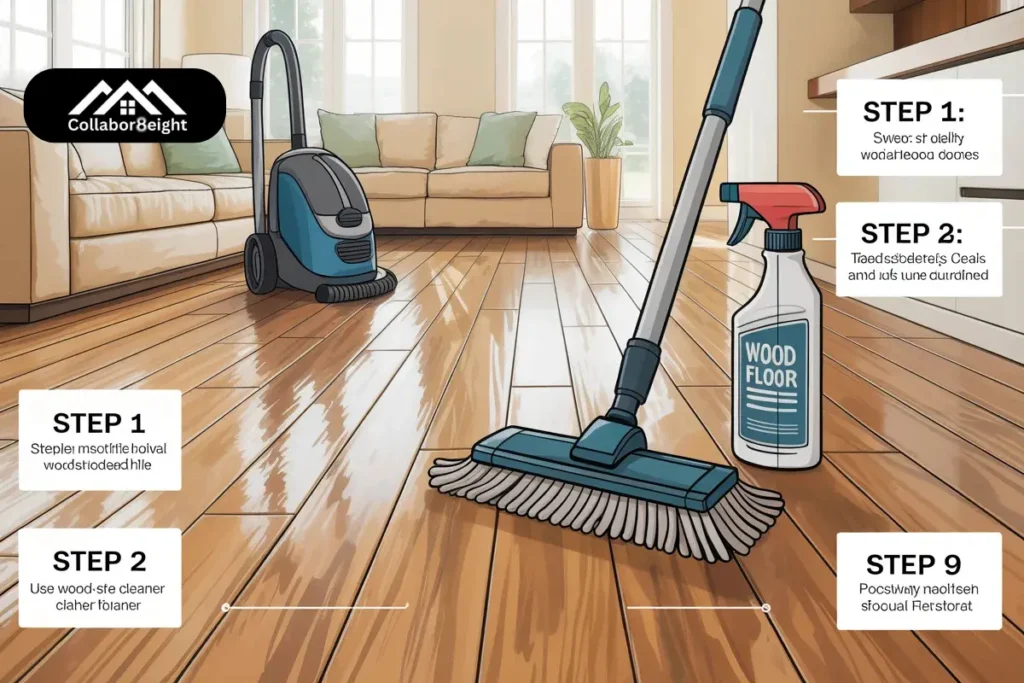
How to Clean Hardwood Floors Step by Step
This is the safest and most effective method used by professionals.
Step 1: Remove loose dirt
Sweep gently or vacuum with a soft brush attachment
Avoid beater bars unless labeled safe for hardwood
Step 2: Prepare your mop
- Use a microfiber mop, not a string mop
- Lightly dampen it, not wet
Step 3: Apply hardwood floor cleaner
- Spray cleaner directly on the floor or mop
- Work in small sections
- Follow the grain of the wood
Step 4: Dry the floor
- Floors should dry within one to two minutes
- If water remains, your mop is too wet
This process cleans effectively without damaging the finish.
Best Cleaners for Hardwood Floors in 2026
In 2026, most experts recommend pH-neutral, residue-free cleaners.
What to look for
- Specifically labeled for hardwood floors
- pH-neutral formula
- No wax, silicone, or acrylic buildup
Popular cleaner types
- Ready-to-use spray cleaners
- Concentrates diluted with water
- Plant-based hardwood cleaners
Always follow the manufacturer’s instructions. More product does not mean better cleaning.
Tip: Avoid DIY vinegar mixes. They are popular online but slowly damage finishes.
Deep Cleaning Hardwood Floors Safely
Deep cleaning is needed a few times per year, especially in busy homes.
When to deep clean
- Floors look dull even after regular cleaning
- Sticky residue remains
- Visible grime in traffic paths
How to deep clean without damage
- Vacuum thoroughly
- Use a recommended deep-clean hardwood solution
- Mop slowly with a damp microfiber mop
- Rinse mop frequently in clean water
- Dry immediately
If buildup remains, it may be time for professional cleaning or recoating, not stronger chemicals.
Removing Common Stains and Spills
Accidents happen. The key is quick action.
Water spots
- Dry immediately
- Buff lightly with a microfiber cloth
Food spills
- Wipe with a damp cloth
- Use a drop of hardwood cleaner if sticky
Grease marks
- Apply a small amount of wood-safe cleaner
- Gently wipe, do not scrub hard
Pet accidents
- Clean immediately
- Use an enzyme-based cleaner approved for hardwood
- Avoid soaking the area
Dark stains that do not lift may indicate damage below the finish and require professional repair.
How to Clean Old or Dull Hardwood Floors
Older floors often lose shine due to wear or residue, not dirt.
What helps
- Remove buildup using a residue-removing hardwood cleaner
- Use microfiber pads, not polish
- Improve lighting and rugs to reduce wear
What does not help
- Floor wax on polyurethane finishes
- Heavy polish layers
- Harsh scrubbing
If the floor still looks tired, a professional screen and recoat may be the best solution.
Steam Mops and New Cleaning Tech in 2026
Technology has improved, but caution is still needed.
Are steam mops safe?
- Only if approved by your floor manufacturer
- Use lowest heat setting
- Avoid frequent use
Many flooring brands still warn against steam because heat and moisture can break down finishes over time.
New trends
- Spray mops with refillable hardwood cleaner
- Reusable microfiber systems
- Smart vacuums with hardwood-safe sensors
When in doubt, follow the floor manufacturer’s care guide.
Long-Term Hardwood Floor Care Tips
Cleaning is only part of floor care.
Prevent damage
- Place mats at all entrances
- Use felt pads under furniture
- Remove shoes indoors
- Trim pet nails regularly
Control environment
- Maintain indoor humidity between 35 and 55 percent
- Use humidifiers in dry winters
- Avoid direct sun exposure with curtains or rugs
These steps extend the life of your floors more than any cleaner.
Final Thoughts
Learning how to clean hardwood floors properly is about balance. You want clean floors, but you also want to protect the finish that makes them beautiful. With gentle tools, the right cleaners, and consistent habits, your hardwood floors can stay strong, shiny, and timeless well into the future.
FAQs About Cleaning Hardwood Floors
1. What is the safest way to clean hardwood floors?
The safest way is to remove dust first, then use a lightly damp microfiber mop with a cleaner made specifically for hardwood floors. Avoid excess water and never soak the floor.
2. How often should hardwood floors be cleaned?
Dusting or vacuuming should be done several times a week. Damp mopping once a week is usually enough, depending on foot traffic, pets, and kids.
3. Can I use vinegar or baking soda on hardwood floors?
No. Vinegar is acidic and can slowly damage the protective finish. Baking soda is abrasive and may cause scratches. Stick to pH-neutral hardwood floor cleaners.
4. Are steam mops safe for hardwood floors in 2026?
Most manufacturers still do not recommend steam mops. Heat and moisture can weaken the finish over time. Only use one if your flooring brand clearly approves it.
5. What should I do if water spills on hardwood floors?
Wipe it up immediately with a dry cloth. Standing water can seep into seams and cause warping, swelling, or dark stains.
6. How do I make dull hardwood floors look clean again?
First remove residue using a proper hardwood cleaner. If the floor still looks dull, the finish may be worn and could need professional recoating rather than more cleaning.
7. Is it okay to use a vacuum on hardwood floors?
Yes, as long as the vacuum is designed for hardwood floors and does not use a rotating beater bar. Soft brush or suction-only modes are best.
8. Do hardwood floors need wax or polish?
Most modern hardwood floors do not need wax or polish. These products often create buildup and make floors look cloudy instead of shiny.